Corridors Kept Open and Accessible
Right Of Way Clearing in Lockport for access strips and utility lines where vegetation has grown over
Rural parcels around Lockport and Batavia often have old access strips, utility easements, or property line corridors that were once clear but have since been overtaken by brush and young trees. Right of way clearing opens those strips back up by grinding the vegetation into mulch where it stands, using forestry mulching to process brush, saplings, and small trees without piling debris or blocking the corridor. All Clear Land Solutions mulches along the marked route, leaving an open, navigable path with a mulch layer that suppresses regrowth and keeps the right of way accessible over time.
The crew mulches along the designated strip, grinding vegetation into place so the corridor is cleared to the width and length your project or maintenance plan requires. Width and route are confirmed with the property owner before work begins, so the clearing stops at the correct boundaries and the right of way is opened without encroaching on adjacent areas. The mulched material stays in place as ground cover, so no hauling or disposal is needed.
Request an on-site consultation to review the route, determine the required width, and confirm what vegetation needs to be cleared.
The Difference Between Clearing and Maintaining Access
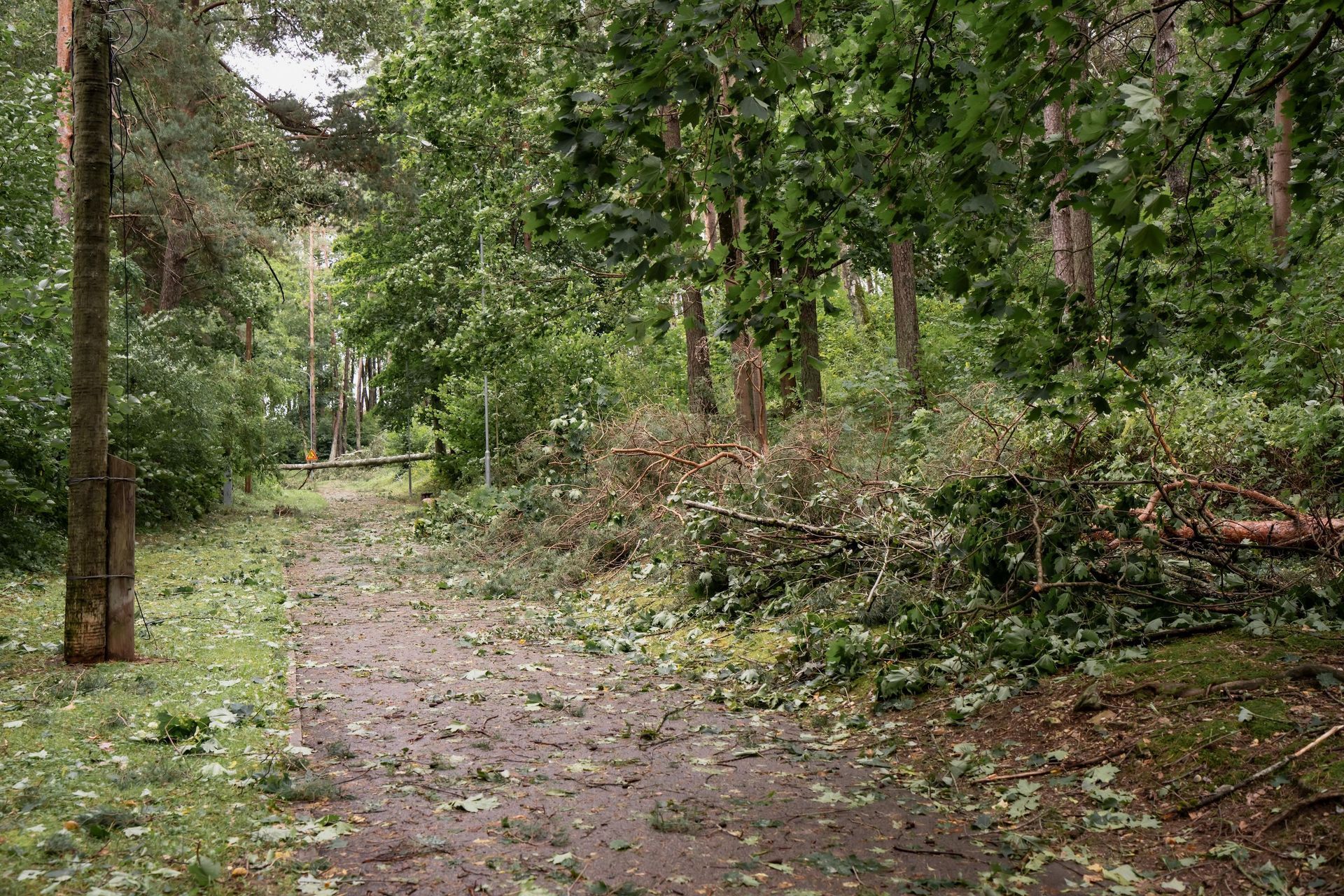
Right of way clearing is not the same as mowing or trimming—it is the removal of woody vegetation that has established itself in the corridor, often after years of neglect. The mulcher processes that vegetation by grinding it into small pieces on contact, turning dense brush and saplings into a uniform mulch layer in one pass. The mulch suppresses the seed bank and slows regrowth, so the corridor stays open longer than it would after a simple mowing.
Once the clearing is complete, you will see an open strip of ground with a consistent mulch layer instead of tangled brush and obstructed sightlines. Access routes become passable for vehicles or foot traffic, utility lines are exposed for inspection or maintenance, and property boundaries are clearly defined. The corridor remains functional without requiring immediate follow-up work.
The width of the cleared strip depends on what the right of way is used for—utility easements typically require a specific clearance width set by the utility company, while access routes are cleared wide enough for vehicles or equipment to pass without interference. Those dimensions are confirmed before the mulching begins, so the finished corridor meets the operational requirements without excessive clearing.
Questions Before Starting Your Project
Right of way clearing involves coordinating the route, confirming the required width, and understanding how the mulched corridor will behave after the crew leaves.
How is the right of way route marked before clearing begins?
The route and width are confirmed with the property owner or utility company before work starts, and the crew mulches along that marked corridor so the clearing stops at the correct boundaries and does not extend into adjacent areas.
What vegetation can the mulcher handle in a right of way?
The mulcher grinds brush, saplings, and small trees into mulch on contact, clearing woody vegetation that has grown in over old access strips or utility lines without leaving stumps or piles behind.
Why do access strips and utility lines around Lockport often need clearing?
Rural parcels in the area have older easements and access routes that were left unmanaged for years, allowing brush and young trees to reclaim the corridors and obstruct access or utility maintenance.
What happens to the mulched material after the right of way is cleared?
The mulch stays on the ground as a protective cover layer, suppressing regrowth and breaking down gradually over time, so no hauling or disposal is required and the corridor remains open longer.
How wide does a right of way need to be cleared?
Width depends on the purpose of the corridor—utility easements require specific clearance widths set by the utility company, while access routes are cleared wide enough for vehicles or equipment to pass without obstruction, and those dimensions are confirmed before mulching begins.
All Clear Land Solutions also clears right of ways in Niagara Falls, North Tonawanda, Newfane, Wheatfield and Batavia. Call (716) 220-8844 to schedule a free estimate for clearing access strips, utility easements, or property line corridors.